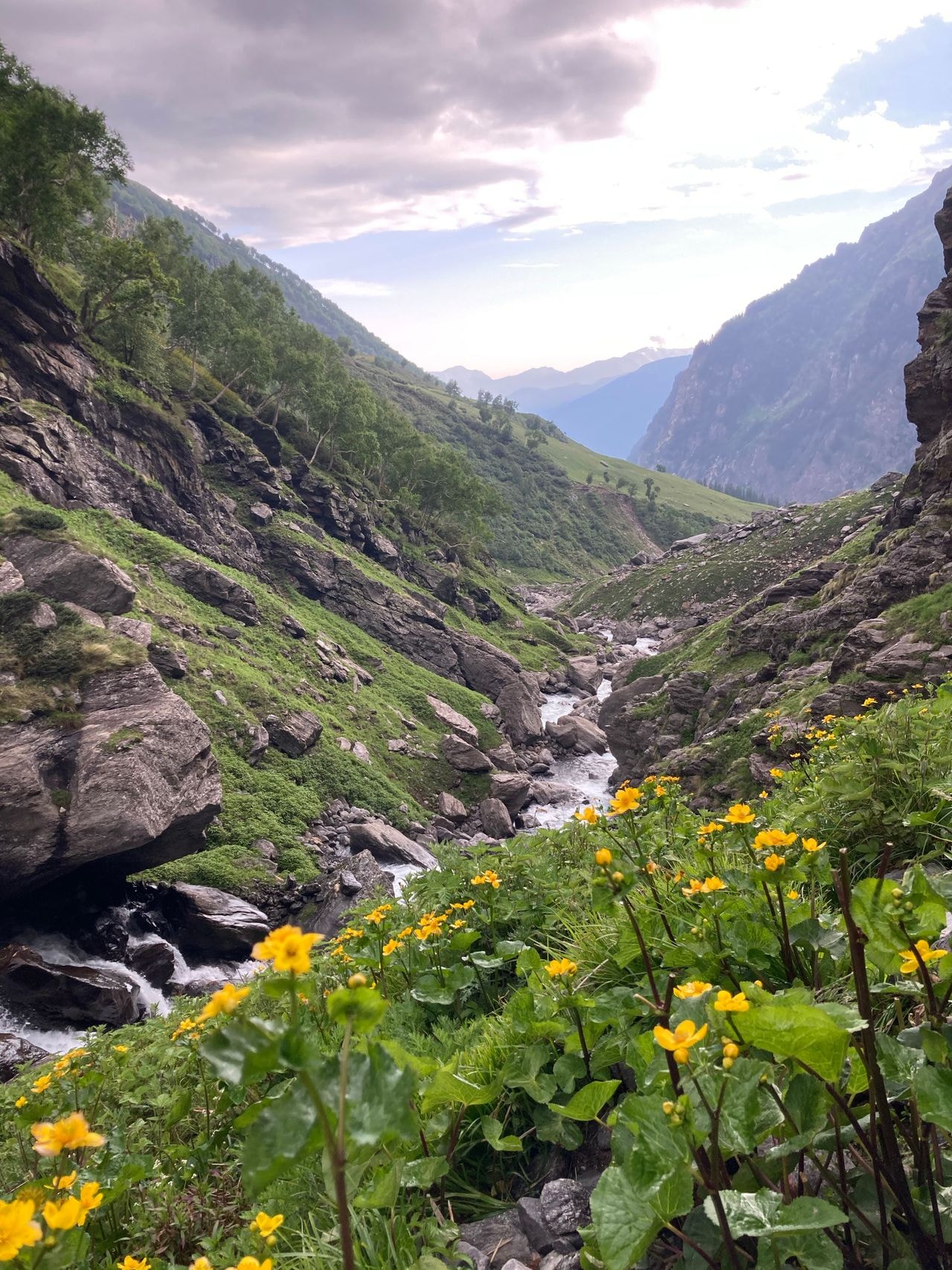
There's a narrow window every year when a remote valley in Uttarakhand turns into something that doesn't look like it belongs in India at all. Hundreds of wildflower species — brahmakamal, blue poppy, cobra lily, marigold, anemone — carpet the ground from one mountain wall to the other. The Valley of Flowers is open from June 1 to October 31, but the real show happens in a roughly three-week window between late July and mid-August. That window is right now.
If you've been sitting on this trek for a couple of years, 2026 is worth the push. Here's everything you need — permits, timing, what to carry, and a day-by-day itinerary that doesn't require you to be a serious trekker.
When Is Peak Bloom in the Valley of Flowers?
The valley opens June 1 and closes October 31 every year. But the bloom timeline follows a predictable arc:
June 1–30: Early season. Snow is melting, the first wildflowers (primulas, marsh marigolds) start appearing. The valley is green but not yet at full bloom. Fewer crowds.
July 1–20: The bloom picks up significantly. More species visible, the landscape fills in. Rain is frequent but manageable with the right gear.
July 21 – August 10: Peak bloom. This is when the valley looks like those photos. Over 500 species flowering simultaneously — brahmakamal, blue poppy, cobra lily, geraniums, orchids. The best three weeks of the year.
August 11–September: Post-peak. Still beautiful, but some species start fading. The advantage: thinner crowds and lower prices in Ghangaria.
October: Autumn colours. A completely different experience — no flowers, but the valley turns gold and rust. The entry closes October 31.
If you can only pick one week, aim for the last week of July or first week of August. That's the sweet spot where maximum species are flowering and the monsoon hasn't turned too aggressive.
How to Get the Valley of Flowers Permit in 2026
You need an entry permit to enter the valley. Here's what's changed and what hasn't:
Permit cost: ₹150 for Indian nationals, ₹600 for foreign nationals (per day, per person)
Where to get it: Available online or at the forest check-post in Ghangaria. The online option saves you the morning queue — do it the night before if you have signal.
Timings: Entry gate opens at 7:00 AM and closes at 5:00 PM. No exceptions. If you're not inside by the cutoff, you're not getting in that day.
Camera fee: ₹500 for professional/DSLR cameras. Phone cameras don't need a separate permit.
One thing that catches people off guard — the permit is per day. So a two-day visit means two permits. Most people do a single full-day visit (7 AM to 4 PM gives you plenty of time), but if you're a serious photographer, two days is worth it.
Valley of Flowers Trek Itinerary — 5 Days from Rishikesh
Day 1: Rishikesh/Haridwar to Govindghat (295 km, 9–10 hours)
Start early — like 5 AM early. The drive follows the Alaknanda River through Devprayag, Rudraprayag, Chamoli, and Joshimath before reaching Govindghat. The road is mostly decent but expect some monsoon patches. Govindghat has basic hotels (₹800–₹1,500/night). Eat dinner, sleep early — tomorrow is the real start.
Day 2: Govindghat → Pulna → Ghangaria (10 km trek, 5–6 hours)
Drive or share a jeep from Govindghat to Pulna (3 km, ₹50 per person). The trek from Pulna to Ghangaria is 10 km of steady uphill along the Lakshman Ganga river. The trail is well-marked and you'll pass waterfalls, small bridges, and chai stops every 2 km. Ghangaria sits at 3,050 metres — expect it to be noticeably cooler than the valley below. Hotels in Ghangaria cost ₹600–₹1,500 per night (basic but functional). Mule service is available for ₹2,500–₹3,500 if your knees aren't cooperative.
Day 3: Ghangaria → Valley of Flowers → Ghangaria (4 km one way, 5–7 hours)
This is the day. Leave by 7 AM when the gate opens. The 4 km trail from Ghangaria to the valley entrance is relatively flat for the first 2 km, then opens up into the valley proper. Carry lunch — there are no food stalls inside the valley. Spend 4–5 hours exploring, photographing, and just sitting in a place that genuinely feels unreal. The valley floor stretches about 5 km, but most people cover the first 3 km where the densest bloom is. Return to Ghangaria by 4 PM.
Day 4: Hemkund Sahib Side Trek (Optional) + Return to Govindghat
If you're up for it, the Hemkund Sahib trek from Ghangaria is 6 km uphill to a Sikh shrine at 4,329 metres — one of the highest gurudwaras in the world. It's steep and demanding, but the glacial lake at the top surrounded by seven peaks is stunning. If you skip Hemkund, start the descent to Govindghat early.
Day 5: Govindghat → Rishikesh/Haridwar
The return drive is the same route. Plan to reach Rishikesh by evening. If you have a buffer day, break the drive at Joshimath and visit Auli — the ski resort has panoramic views even in summer.
How Much Does the Valley of Flowers Trek Cost?
Here's a realistic budget per person (assuming you're doing it independently, not with an organised group):
Transport (Rishikesh–Govindghat return): ₹1,500–₹3,000 (shared taxi/bus)
Accommodation (4 nights): ₹3,000–₹6,000
Meals (5 days): ₹2,500–₹4,000
Permits: ₹150–₹300 (1–2 day entry)
Porter/mule (optional): ₹2,500–₹3,500
Miscellaneous: ₹1,000–₹2,000
Total: ₹8,000–₹18,000 per person depending on comfort level and whether you hire a mule. An organised trek with a group costs ₹12,000–₹22,000 all-inclusive from Rishikesh.
What to Pack for the Valley of Flowers Trek
Rain gear: Non-negotiable. A poncho or waterproof jacket — not an umbrella (too windy on the trail).
Trekking shoes: Waterproof with ankle support. The trail gets muddy and slippery in monsoon.
Layers: Ghangaria drops to 8–10°C at night. Carry a fleece and a light down jacket.
Snacks and water: Energy bars, dry fruits, 2-litre water bottle. Nothing available inside the valley.
Camera with waterproof cover: You will regret not having one that works in drizzle.
Basic first aid + Diamox: Altitude sickness is possible above 3,000m. Start Diamox a day before if you're prone to it.
Is the Valley of Flowers Trek Difficult?
Honestly, no — not if you're reasonably fit. The Ghangaria trek is moderate (10 km uphill but well-graded), and the Valley of Flowers walk itself is easy to moderate. You don't need mountaineering experience. That said, the altitude (3,050–3,600m) can catch people off guard. Take it slow on Day 2, hydrate aggressively, and you'll be fine. The Hemkund Sahib side trek is the only genuinely hard part — steep switchbacks for 6 km at high altitude.
If you can walk 10 km on flat ground without stopping, you can do this trek.
Plan Your Valley of Flowers Trip with AdventurePedia
We're a Kanpur-based travel company that organises group trips and custom packages across India — including Uttarakhand. If you'd rather not figure out the logistics yourself, we handle transport, accommodation, permits, and a trek guide so you just show up and walk.
Check out our upcoming tour packages or WhatsApp us at +91-9044-489-940 to plan a custom Valley of Flowers trip.