Ask most Indian travellers to name a Southeast Asian food destination and Thailand or Vietnam usually comes up first. Malaysia rarely gets mentioned — which is strange, because Kuala Lumpur and Penang together make up one of the most underrated food cities in Asia, built on a genuine mix of Malay, Chinese, and Indian cooking traditions that have shared the same streets for generations.
With Tourism Malaysia running its "Visit Malaysia 2026" campaign through the year and visa-free entry still open for Indians, this is a good year to plan a trip built almost entirely around eating well. Here's a practical guide to Malaysia's food and culture scene, plus the budget, timing, and visa details you need to actually plan it.
Why 2026 Is a Good Year for a Malaysia Food Trip
Malaysia has extended visa-free entry for Indian tourists for stays of up to 30 days, and this is currently in effect for tourism purposes through the end of 2026. You'll still need to fill out a Malaysia Digital Arrival Card (MDAC) — a free online pre-arrival form — within three days before you land, but there's no visa fee or embassy visit involved. Tourism Malaysia has also built out its "Visit Malaysia 2026" campaign around exactly this kind of food-and-culture travel, with George Town's hawker stalls and Kuala Lumpur's mamak culture getting a lot of the spotlight.
Practically, that means fewer travel-planning headaches and a genuine, government-backed push to get visitors into the country's food streets rather than just its malls and theme parks.
Kuala Lumpur's Street Food Trail — Jalan Alor, Petaling Street & Brickfields
Kuala Lumpur's food scene isn't concentrated in one place — it's spread across a handful of neighbourhoods that each tell a different part of the city's story.
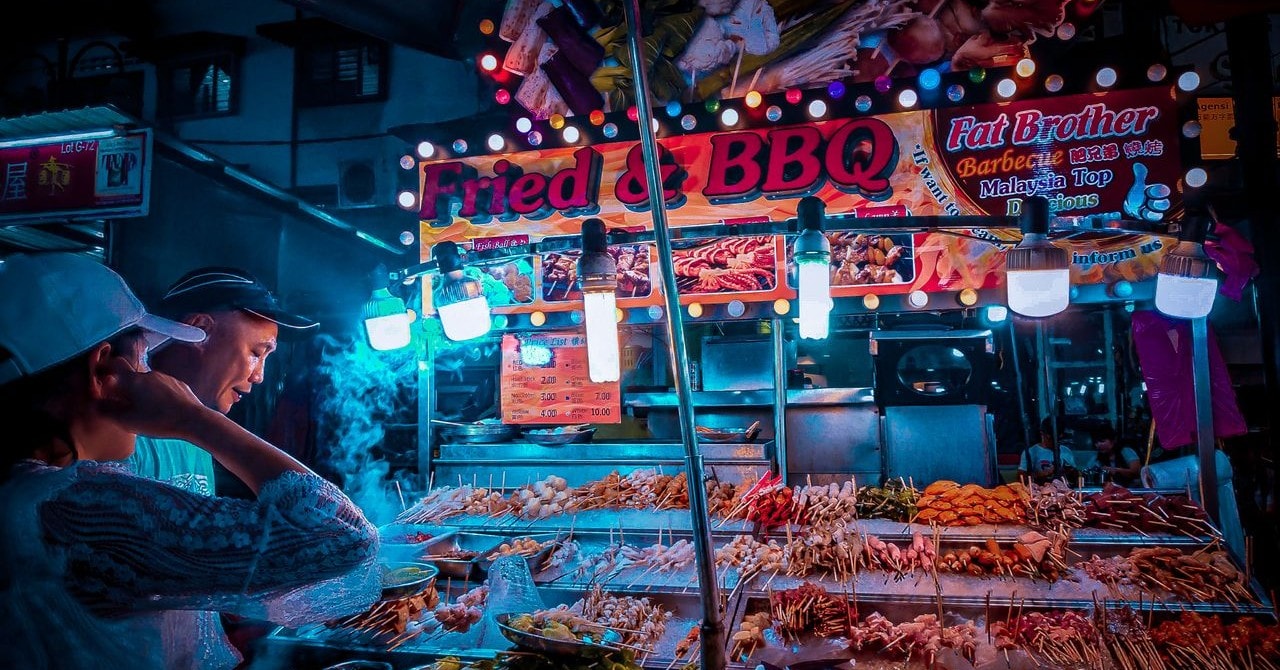
Jalan Alor is KL's best-known night food street, a strip of open-air stalls and small restaurants near Bukit Bintang that stays busy well past midnight, serving everything from grilled satay to Chinese-style noodle soups.
Petaling Street, the heart of KL's Chinatown, is where to go for wonton noodles, herbal soups, and some of the city's oldest coffee shops (kopitiams).
Brickfields, often called KL's "Little India," is where the city's large, generations-old Indian-origin community runs banana-leaf rice restaurants, sweet shops, and flower-garland stalls — worth a visit even if you've had banana-leaf meals back home, since the Malaysian versions carry their own regional twists.
Across all three areas, you'll run into mamak stalls — informal, usually 24-hour eateries historically run by Malaysians of South Indian Muslim descent, serving roti canai, teh tarik (pulled milk tea), and nasi kandar. Mamak culture is as central to Malaysian daily life as dhabas are to Indian highways, and it's one of the clearest examples of how Indian and Malay food traditions have blended here over the decades.
A Familiar Thread: Malaysian-Indian Food
Malaysia has one of the largest Indian-origin populations outside India, made up mostly of communities with South Indian roots who arrived over a century ago and built a food culture that's both familiar and distinct. Banana-leaf rice in Brickfields, for instance, comes with the same idea as back home — rice, several vegetable preparations, rasam, and curry served on a leaf — but the specific dishes, spice blends, and even the way it's plated have picked up their own Malaysian character over generations.
The same goes for thosai, idli, and vadai at Brickfields' South Indian restaurants, and for nasi kandar — a Penang and northern-Malaysia specialty built around rice served with a mix of curries, that traces its roots to Malaysians of Tamil Muslim descent. None of it is a copy of Indian food; it's its own regional cuisine that happens to share a common ancestor, which is part of what makes eating your way through Malaysia interesting for an Indian traveller rather than merely comfortable.
Penang — Malaysia's Unofficial Food Capital
If Kuala Lumpur is Malaysia's food showcase, Penang is where locals say the best versions of everything actually come from. George Town, Penang's capital, is a UNESCO World Heritage-listed city thanks to its colonial-era shophouses and multicultural streetscape — and its hawker centres are considered some of the best in the country.
Dishes to look for on a Penang food trail include assam laksa (a tangy, fish-based noodle soup that's very different from the coconut-milk laksa found elsewhere), char kway teow cooked over a charcoal wok, and Hokkien mee. Gurney Drive's hawker centre and the older stalls around George Town's heritage core are good starting points, and most dishes are best eaten standing or on a plastic stool at the stall itself rather than in a restaurant.
What a Malaysia Food Trip Actually Costs
Malaysia is a relatively affordable food destination by Southeast Asian standards. Street food is priced in Malaysian Ringgit (MYR), which trades at roughly ₹23 to the Ringgit — so a plate of char kway teow or assam laksa (typically MYR 6–10) works out to somewhere around ₹140–230, and a plain roti canai (MYR 1.50–2.50) is closer to ₹35–60. A full hawker meal for one, including a drink, usually stays under ₹500.
For overall trip budgeting, a mid-range Malaysia trip — hotels, local transport, meals, and sightseeing — runs roughly ₹3,500–6,000 per day. If you're adding Langkawi to your itinerary, budget an extra ₹1,500–3,000 per activity for things like the cable car ride or island-hopping boat tours.
Best Time to Visit & How Long to Plan
Malaysia's best travel window runs from March to October, when rainfall is generally lower, though as a tropical country it can rain in any month, so pack for both sun and sudden showers. For a food-focused trip, a good itinerary length is 6–7 days: 3 days in Kuala Lumpur (covering Jalan Alor, Petaling Street, and Brickfields), 2–3 days in Penang for the George Town food trail, and an optional 2-day extension to Langkawi if you want a beach break to close out the trip.
Practical Tips for First-Time Food Travellers
Carry some cash. Most hawker stalls in KL and Penang are cash-only or accept only local e-wallets; card payments are common in malls and sit-down restaurants but not at street stalls.
Halal food is easy to find. Malaysia has widespread halal certification, and most Malay and mamak stalls display it clearly, which also makes it straightforward to identify vegetarian-friendly options at Indian-run stalls in Brickfields.
Pace yourself with spice and portions. Dishes like assam laksa and sambal-based sides can be sharper than expected — order small portions first at a new stall before committing to a full plate.
Drink bottled or filtered water when trying stalls outside major hawker centres, the same precaution you'd take travelling anywhere new.
How to Reach Malaysia from India
Kuala Lumpur is well connected to India. From Delhi, direct flights take roughly 5.5–6 hours, and Chennai and Bangalore also have direct connections at around 4.5–5 hours. Travelling from Kanpur or Lucknow means connecting through Delhi or Mumbai, with total travel time of about 9–10 hours door to door.
FAQs: Malaysia Food & Culture Trip for Indians
Do Indians need a visa for Malaysia in 2026?
No — Indian tourists can currently enter Malaysia visa-free for stays of up to 30 days, a policy in effect for tourism purposes through the end of 2026, though you must complete the free MDAC form online before arrival.
Is Malaysian street food easy for Indian travellers to navigate?
Yes — thanks to Malaysia's large Indian-origin population and long history of Malay-Indian food exchange, options like mamak stalls, banana-leaf rice in Brickfields, and halal-certified stalls are widely available alongside Chinese and Malay hawker food, so vegetarians and those preferring halal food have plenty of choice, especially in KL and Penang.
Can I combine Malaysia with Singapore in the same trip?
Yes — Kuala Lumpur to Singapore is a short flight of about an hour, or a longer road and rail journey, and it's a common way to combine both countries in a single Southeast Asia trip.
Ready to plan your Malaysia food trail? Check out our full Malaysia destination guide for more on Langkawi, Genting Highlands, and Batu Caves, or if you'd rather build a custom Southeast Asia itinerary around food and culture, WhatsApp us at +91-9044-489-940 and we'll help you plan it.